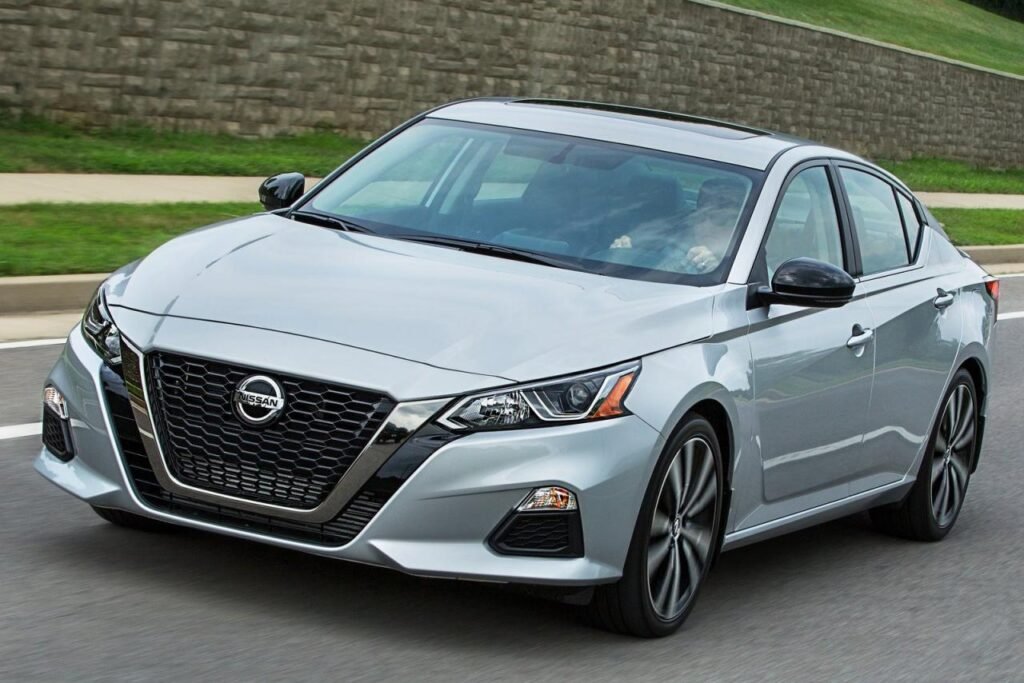
The Nissan Altima L34 is the sixth-generation Altima, introduced for the 2019 model year and produced through the 2025 model year. It brought a redesigned exterior and interior, updated technology, and new powertrain options, including the 2.5-liter four-cylinder engine and, in certain versions, Nissan’s 2.0-liter VC-Turbo engine.
The L34 Altima is generally a practical and comfortable midsize sedan, but there are several problems that owners and used-car buyers should know about. The continuously variable transmission (CVT) is one of the most important areas to inspect, particularly on earlier L34 models. Owner complaint data also includes reports involving electrical systems, brakes, engines, windows, and other components.
Below are some of the most common Nissan Altima L34 problems, including symptoms, possible causes, and solutions.
- CVT Transmission Problems
The CVT is the biggest mechanical concern to investigate when buying an L34 Altima. Some 2019 and 2020 Altima owners have reported CVT shuddering, hesitation, poor acceleration, loss of power, and transmission malfunction. Complaint records for the 2019 Altima include CVT malfunctions, lack of acceleration power, and transmission fluid leaks.
Possible symptoms include:
CVT shuddering or vibration
Hesitation during acceleration
Jerking or surging
RPMs increasing without a corresponding increase in speed
Delayed acceleration
Loss of power
Whining or unusual transmission noises
Transmission warning messages
Difficulty maintaining speed
Some severe CVT problems can involve internal belt or pulley damage. Technical service information has addressed certain 2019–2021 Altima CVT symptoms and diagnostic trouble codes associated with internal transmission damage.
Solution:
Have the CVT diagnosed before replacing parts. A technician should check transmission codes, fluid condition, software updates, and the transmission’s operating behavior.
If the transmission has internal damage, repair or replacement may be necessary.
When test-driving a used L34 Altima, pay particular attention to low-speed acceleration, highway acceleration, and any vibration or hesitation.
- CVT Fluid and Maintenance Problems
Although the CVT is designed to operate differently from a conventional automatic transmission, it still requires the correct fluid and proper maintenance.
Using incorrect fluid or neglecting recommended maintenance can contribute to transmission problems.
Possible symptoms of CVT-related problems include:
Shuddering
Overheating
Delayed acceleration
Transmission warning lights
Unusual noises
Poor performance under load
Solution:
Use only the manufacturer-specified CVT fluid and follow the appropriate maintenance procedures for the specific Altima. Avoid using generic automatic-transmission fluid in a CVT.
If the vehicle has a history of transmission problems, have the CVT inspected before purchasing it.
- Engine Problems
The L34 Altima was offered with different engines depending on the model year and trim. The 2.5-liter four-cylinder is the most common, while the 2.0-liter variable-compression-ratio VC-Turbo was available on certain versions.
Potential engine problems can include:
Check Engine Light
Rough idle
Engine misfires
Loss of power
Poor acceleration
Oil consumption
Hard starting
Engine stalling
Possible causes include ignition problems, fuel-system issues, sensors, air leaks, throttle-body problems, or other engine-management faults.
Solution:
Scan the vehicle for OBD-II trouble codes and use live engine data when necessary. A Check Engine Light should be diagnosed rather than simply cleared.
For the VC-Turbo engine, unusual engine noises, oil consumption, or performance changes deserve particular attention because the engine uses a more complex variable-compression system.
- Engine Stalling or Loss of Acceleration
Loss of acceleration is an important complaint to take seriously because it can create a safety issue in traffic.
Possible causes include:
CVT problems
Fuel delivery problems
Engine management faults
Throttle-body problems
Sensor failures
Ignition problems
Some 2019 Altima complaints specifically describe situations involving CVT malfunction and loss of acceleration.
Solution:
If the vehicle suddenly loses power, have it diagnosed rather than continuing to drive it normally. A complete scan of the engine and transmission control modules can help identify the problem.
- Electrical and Electronic Problems
Electrical problems can become more noticeable as an L34 Altima ages. Owner complaint data for the 2019 model includes electrical complaints.
Possible symptoms include:
Warning lights appearing unexpectedly
Battery going dead
Intermittent electrical accessories
Infotainment problems
Bluetooth connection issues
Power window problems
Starting problems
Electronic warning messages
Possible causes include a weak battery, alternator problems, poor grounds, wiring faults, or a malfunctioning electronic component.
Solution:
Start by testing the battery and charging system. If the battery repeatedly goes dead, check for parasitic electrical drain.
Intermittent electrical problems may require a professional diagnostic scan and electrical testing.
- Infotainment and Connectivity Problems
The L34 Altima uses a variety of infotainment systems depending on trim and model year. Some vehicles can develop problems with touchscreen operation, Bluetooth connectivity, smartphone integration, or the audio system.
Possible symptoms include:
Bluetooth disconnecting
Phone pairing problems
Touchscreen freezing
Audio system glitches
Navigation problems
Slow system response
Apple CarPlay or Android Auto connectivity issues
Solution:
Check for available software updates and verify that the phone and infotainment system are compatible. Persistent problems may require diagnosis of the head unit, wiring, or related modules.
- Automatic Emergency Braking and Driver-Assistance Issues
The L34 Altima is equipped with various driver-assistance systems depending on trim and model year. These can include automatic emergency braking, forward collision warning, lane-departure warning, blind-spot monitoring, and other systems.
Possible symptoms include:
Warning messages
Driver-assistance systems becoming unavailable
False warnings
Automatic braking warnings
Sensors becoming blocked or dirty
Solution:
Keep cameras, radar sensors, and their surrounding areas clean and unobstructed. If a warning remains after cleaning or restarting the vehicle, the system should be professionally diagnosed.
A damaged windshield, front-end repair, or sensor misalignment can also affect some driver-assistance systems.
- Brake Problems
Brake wear is normal maintenance, but brake-related complaints can also occur as an L34 Altima accumulates mileage.
Possible symptoms include:
Squeaking
Grinding
Brake pedal vibration
Uneven braking
Premature brake wear
Brake warning light
Vehicle pulling while braking
Solution:
Inspect brake pads, rotors, calipers, brake fluid, and brake lines. Replace worn or damaged components as necessary.
Any sudden change in braking performance should be inspected immediately.
- Air Conditioning and HVAC Problems
Climate-control problems can develop with age and mileage.
Possible symptoms include:
A/C blowing warm air
Weak airflow
Blower motor not working
Fan operating only at certain speeds
Unusual HVAC noises
Poor cooling performance
Temperature changing unexpectedly
Possible causes include refrigerant leaks, compressor problems, blower motor failure, electrical faults, or HVAC control problems.
Solution:
Have the A/C system checked for leaks and verify refrigerant pressures. If the blower does not work, the motor, resistor or control module, fuses, and wiring should be tested.
- Suspension and Steering Problems
Suspension components naturally wear with mileage, and some L34 Altimas can develop noises or handling problems.
Possible symptoms include:
Clunking over bumps
Squeaking
Steering vibration
Uneven tire wear
Vehicle pulling to one side
Loose steering feel
Wheel-bearing noise
Possible causes include worn struts, control-arm bushings, ball joints, tie rods, wheel bearings, or alignment problems.
Solution:
Have the steering and suspension inspected if you notice unusual noises, vibrations, or changes in handling.
- Windshield and Glass Problems
Windshield and window problems have also appeared in owner complaint data for L34 Altimas. The 2019 model, for example, has documented owner complaints involving cracked windshields.
Possible symptoms include:
Windshield cracking
Chips spreading quickly
Power windows operating slowly
Window regulators failing
Wind noise
Water leaks around glass
Solution:
Repair small windshield damage when possible and replace severely damaged glass. If a power window operates slowly or gets stuck, inspect the regulator, motor, wiring, and window tracks.
- Fuel System Problems
Fuel-system issues can cause starting, drivability, or Check Engine Light problems.
Possible symptoms include:
Long cranking
Difficulty starting
Engine hesitation
Loss of power
Fuel odor
Poor fuel economy
Check Engine Light
Possible causes include fuel pump problems, injectors, fuel-pressure issues, or EVAP system faults.
Solution:
Check fuel pressure and scan for diagnostic codes. If you smell gasoline, have the vehicle inspected promptly because a fuel leak can create a fire hazard.
Nissan Altima L34 Recalls
The exact recall history depends on the model year, production date, engine, trim, and VIN. Some L34 Altima years have had recalls involving safety systems, electronics, fuel-system components, and other vehicle components.
Do not assume that a recall listed for one L34 model year applies to every Altima. Always check the individual vehicle identification number (VIN) for open recalls and completed recall repairs.
Are Nissan Altima L34 CVTs Reliable?
The CVT deserves careful attention, especially on early L34 vehicles. The 2019 Altima, for example, has documented complaints involving CVT malfunction, acceleration problems, and transmission fluid leaks.
However, the existence of CVT complaints does not mean every L34 Altima will experience transmission failure. Maintenance history, mileage, driving conditions, and the condition of the individual vehicle all matter.
The L34 should therefore be evaluated individually rather than automatically classified as unreliable.
What to Check Before Buying a Used Nissan Altima L34
Before purchasing a used L34 Altima, check:
VIN for open recalls
CVT operation
Transmission fluid and service history
Acceleration from a stop
Highway acceleration
Any CVT shuddering or hesitation
Engine oil level and condition
Coolant level
Check Engine Light
Stored OBD-II trouble codes
Battery and charging system
Air conditioning
Infotainment and Bluetooth
Backup camera
Driver-assistance systems
Brakes and tires
Suspension and steering
Windshield condition
Maintenance records
During the test drive, don’t just drive around the parking lot. Test the vehicle at different speeds and under different acceleration conditions. A CVT problem may be more noticeable after the transmission reaches operating temperature.
A pre-purchase inspection by an independent mechanic is strongly recommended for a used L34 Altima.
Nissan Altima L34 Common Problems: Frequently Asked Questions
What is the biggest problem with the Nissan Altima L34?
The CVT transmission is one of the most important areas to inspect, particularly on early L34 models. Some 2019–2020 Altimas have documented complaints involving CVT malfunction, shuddering, hesitation, and acceleration problems.
Does the Nissan Altima L34 have CVT problems?
Yes, some L34 Altimas have experienced CVT problems. However, the severity and frequency vary by model year and individual vehicle. Proper diagnosis and maintenance are important.
Which L34 Altima engine is better?
The 2.5-liter naturally aspirated four-cylinder is generally the simpler engine choice compared with the more complex 2.0-liter VC-Turbo. However, condition and maintenance history are more important than engine choice alone when evaluating a used vehicle.
How long can a Nissan Altima L34 last?
There is no guaranteed mileage limit. A properly maintained L34 Altima can potentially provide many years of service, but longevity depends on maintenance, driving conditions, mileage, and the condition of major components such as the CVT.
Is the Nissan Altima L34 a good used car?
It can be. The L34 offers comfortable seating, good fuel economy, and useful technology. However, buyers should pay particular attention to CVT behavior, maintenance history, engine condition, electronics, and recall status.
Final Thoughts
The Nissan Altima L34 can be a practical and comfortable used midsize sedan, but buyers should know its potential problem areas before purchasing one.
The CVT is the most important component to inspect, especially on earlier L34 models. Other areas worth checking include the engine, electrical system, infotainment, driver-assistance technology, brakes, A/C, suspension, and fuel system.
The best way to buy a used L34 Altima is to check the VIN for recalls, review its maintenance history, test-drive the CVT carefully, scan for diagnostic trouble codes, and have an independent mechanic perform a pre-purchase inspection.
A careful inspection can help identify Nissan Altima L34 common problems before they turn into expensive repairs.