A car that won’t start can be caused by something as simple as a weak battery or an empty fuel tank, but it can also indicate a problem with the starter, alternator, fuel system, ignition system, or engine. The first step is to determine exactly what happens when you turn the key or press the start button.
This guide explains the most common reasons a car won’t start, how to diagnose the problem, and what you can do to fix it.
What Happens When You Try to Start the Car?
Pay attention to the vehicle’s behavior when you attempt to start the engine. Different symptoms can point to different problems.
If the engine does not crank at all, the battery, starter, ignition switch, neutral safety switch, or electrical system may be responsible.
If you hear a clicking sound but the engine does not crank, a weak battery, poor battery connection, or failing starter is a common possibility.
If the engine cranks normally but does not start, the problem may involve fuel delivery, ignition, air intake, engine timing, or the immobilizer system.
If the engine starts but immediately shuts off, possible causes include fuel delivery problems, an immobilizer issue, or an engine management fault.
- Dead or Weak Battery
A weak or dead car battery is one of the most common reasons a vehicle won’t start.
Common symptoms include:
Dim headlights
Interior lights are weak or do not turn on
Rapid clicking when attempting to start
A single click with no engine cranking
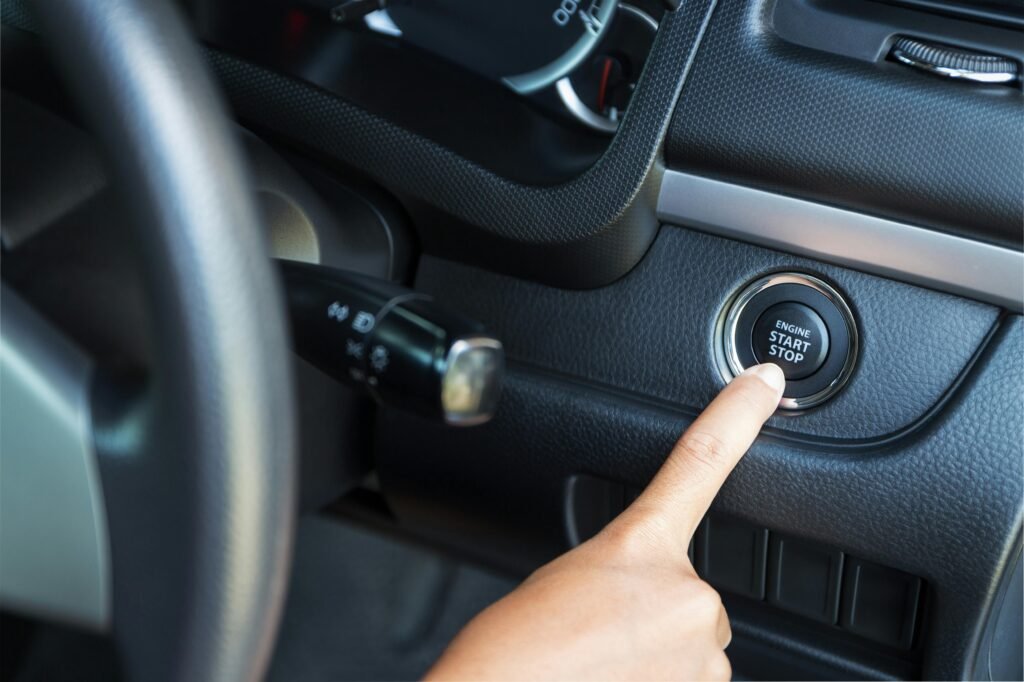
No response when pressing the start button
Electrical accessories working but the engine not cranking
A battery can become discharged if lights were left on, the vehicle has not been driven for an extended period, or the battery is old.
Solution:
Check the battery terminals for corrosion or loose connections. If the battery is discharged, try jump-starting the vehicle using the correct procedure. If the battery repeatedly loses charge, test both the battery and charging system.
- Bad Battery Terminals or Ground Connection
Sometimes the battery itself is fine, but electricity cannot reach the starter because of a poor connection.
Corroded, loose, or damaged battery terminals can cause:
Clicking when starting
Intermittent starting
Complete loss of electrical power
Slow engine cranking
A damaged engine or chassis ground cable can cause similar symptoms.
Solution:
Inspect the positive and negative battery terminals and the ground connections. They should be clean, tight, and free from significant corrosion or damage.
- Faulty Starter Motor
The starter motor turns the engine when you start the vehicle. If the starter fails, the engine may not crank even when the battery has enough power.
Possible symptoms include:
Single click when turning the key
No engine cranking
Intermittent starting
Starter works after tapping or moving the vehicle in some cases
Electrical accessories continue to operate normally
Solution:
A technician can test the starter motor, starter relay, wiring, and voltage reaching the starter. If the starter has failed, it may need to be repaired or replaced.
- Alternator Problems
The alternator charges the battery while the engine is running. A failing alternator can eventually leave the battery too weak to start the car.
Possible signs include:
Battery warning light
Dim or flickering lights
Electrical accessories behaving strangely
Repeated dead battery
Engine stalling after starting
Whining or unusual noises
Solution:
Test the battery and charging system. Replacing the battery without addressing a faulty alternator can result in the new battery becoming discharged again.
- Empty Fuel Tank or Fuel Delivery Problem
If the engine cranks but will not start, check the fuel level first.
Other fuel-system problems can include:
Failed fuel pump
Blocked fuel filter
Faulty fuel pump relay
Fuel injector problems
Low fuel pressure
Fuel pressure regulator problems
Solution:
Confirm that the vehicle has fuel and check fuel pressure if the engine still will not start. A mechanic can test whether the fuel pump is operating and whether the engine is receiving the required fuel pressure.
- Faulty Ignition System
Gasoline engines require a properly timed spark to ignite the air-fuel mixture. A problem with the ignition system can prevent the engine from starting.
Potential causes include:
Bad spark plugs
Faulty ignition coils
Ignition module problems
Damaged ignition wiring
Crankshaft position sensor failure
Camshaft position sensor failure
Solution:
A diagnostic scan and ignition-system testing can help identify the problem. If the engine control module has stored trouble codes, they can provide important clues.
- Bad Crankshaft or Camshaft Position Sensor
The crankshaft and camshaft position sensors provide the engine computer with information about engine position and speed.
If one of these sensors fails, the engine may crank normally but not start.
Possible symptoms include:
Engine cranks but does not start
Intermittent starting
Engine stalls
Check Engine Light
Poor engine performance
Solution:
Scan the vehicle for diagnostic trouble codes and test the sensor signals. Do not replace the sensor solely because a related code is present without confirming the diagnosis.
- Immobilizer or Key Problem
Modern vehicles use electronic immobilizer systems to prevent unauthorized starting. If the vehicle does not recognize the key, the engine may crank but fail to start, or the starter may not operate depending on the vehicle.
Possible symptoms include:
Security or immobilizer warning light
Key not recognized message
Engine starts and immediately shuts off
Push-button start does not respond
Spare key works normally
Solution:
Try the spare key if available. Check the key fob battery for keyless-start vehicles and follow the vehicle manufacturer’s procedure for starting with a low key-fob battery.
- Faulty Ignition Switch or Start Button
A worn ignition switch or faulty start button can prevent the vehicle from sending the correct electrical signal to the starter and engine control systems.
Possible symptoms include:
No response when turning the key
Intermittent starting
Accessories working inconsistently
Start button does not respond
Vehicle starts only occasionally
Solution:
The ignition switch, start button, wiring, and related relays should be tested.
- Park/Neutral Safety Switch
Automatic vehicles generally have a transmission range sensor or neutral safety switch that prevents the engine from starting unless the transmission is in Park or Neutral.
If the switch fails, the car may not crank.
Solution:
Try starting the vehicle in Neutral if the manufacturer’s instructions allow it. If it starts in Neutral but not Park, the transmission range sensor or related adjustment may need inspection.
- Engine Flooding
Some gasoline engines can become flooded with too much fuel, particularly under certain starting conditions.
Possible symptoms include:
Strong fuel smell
Engine cranks but does not start
Repeated unsuccessful starting attempts
Solution:
Starting procedures for a flooded engine vary by vehicle. Follow the manufacturer’s instructions rather than repeatedly cranking the engine.
- Faulty Engine Control Module or Electrical System
A problem with a control module, fuse, relay, wiring harness, or power supply can prevent the engine from starting.
Possible symptoms include:
Multiple warning lights
No communication with diagnostic equipment
Several electrical systems failing simultaneously
Intermittent starting
No-crank or no-start condition
Solution:
Check relevant fuses, relays, power supplies, grounds, and communication systems. Electrical diagnostics may be necessary when several systems fail at the same time.
- Mechanical Engine Problem
Although less common than a battery or starter problem, an internal engine failure can also cause a no-start condition.
Possible causes include:
Broken timing belt
Timing chain failure
Low engine compression
Seized engine
Serious internal engine damage
If the engine suddenly stopped while driving and now cranks unusually fast or makes abnormal noises, stop attempting to start it and have the vehicle inspected.
Car Won’t Start but Has Power
If the dashboard lights and electrical accessories work but the engine will not crank, do not assume the battery is automatically good.
The battery may still have insufficient cranking power. Other possible causes include:
Bad starter
Poor battery connection
Starter relay problem
Ignition switch problem
Park/neutral safety switch
Clutch safety switch on a manual transmission
Immobilizer problem
A battery test and starter circuit test can help identify the cause.
Car Won’t Start but Makes a Clicking Noise
A clicking noise often indicates a problem with the starting circuit.
Rapid clicking commonly points toward a weak battery or poor battery connection.
A single strong click can indicate a starter motor, starter solenoid, cable, or connection problem.
However, clicking alone is not enough to confirm the exact cause. Battery voltage and voltage drop testing can help determine where the problem is.
Car Won’t Start but Cranks
If the engine cranks at normal speed but does not start, focus on the systems required for combustion:
Fuel
Ignition
Air
Engine timing
Compression
Engine position signals
Immobilizer system
A diagnostic scanner can be particularly useful because the engine computer may have stored trouble codes related to sensors, ignition, or fuel delivery.
Car Won’t Start After Getting Gas
If the vehicle has difficulty starting immediately after refueling, possible causes include an EVAP system problem, purge valve issue, fuel delivery problem, or another engine-management fault.
A faulty purge valve can allow excessive fuel vapors into the engine, potentially causing hard starting after refueling.
If the problem happens repeatedly after filling the tank, have the EVAP and fuel systems inspected.
Car Won’t Start in Cold Weather
Cold temperatures can make starting problems more likely because batteries produce less available power in cold conditions and engine oil becomes thicker.
Possible causes include:
Weak battery
Poor battery connections
Incorrect or old engine oil
Fuel delivery problems
Glow plug problems on diesel engines
Starter problems
If a vehicle regularly struggles to start in cold weather, test the battery and charging system before winter.
How to Diagnose a Car That Won’t Start
A systematic diagnosis can prevent unnecessary parts replacement.
Start with these basic checks:
- Check whether the headlights and dashboard turn on.
- Listen carefully when attempting to start the engine.
- Check the fuel level.
- Inspect the battery terminals.
- Try the spare key if an immobilizer problem is suspected.
- Check for warning lights or messages.
- Scan the vehicle for OBD-II trouble codes.
- Determine whether the engine cranks.
- If it cranks, check fuel delivery and ignition.
- If it does not crank, test the battery and starter circuit.
- Check relevant fuses and relays.
- Perform further electrical or mechanical tests if necessary.
Avoid replacing the battery, starter, fuel pump, or sensors based only on symptoms. Proper testing is usually faster and cheaper than replacing parts by trial and error.
When Should You Call a Mechanic?
Professional diagnosis is recommended if the vehicle still will not start after basic checks or if there are signs of a serious mechanical or electrical problem.
You should seek professional assistance if:
The engine stopped suddenly while driving
You smell leaking gasoline
There is smoke or burning odor
The engine makes unusual mechanical noises
The battery repeatedly goes dead
The vehicle has severe electrical problems
The Check Engine Light is accompanied by serious drivability problems
The engine cranks unusually fast
You suspect a timing belt or timing chain failure
Frequently Asked Questions
Why won’t my car start but the lights work?
Working lights do not necessarily mean the battery has enough power to start the engine. A weak battery, bad battery connection, faulty starter, ignition switch, or other starting-system problem can cause a no-start condition.
Why won’t my car start but it has a new battery?
A new battery does not rule out a starter, alternator, fuel, ignition, immobilizer, wiring, or engine problem. If the engine does not crank, test the starter circuit. If it cranks but does not start, investigate fuel, ignition, sensors, and engine timing.
Why does my car click but not start?
Rapid clicking is often associated with low battery voltage or poor battery connections. A single click can be related to the starter or starter solenoid. Testing is required to determine the exact cause.
Can a bad alternator cause a car not to start?
Yes. A failed alternator can discharge the battery while the vehicle is running. Once the battery becomes too weak, the engine may not have enough power to crank.
Can a bad starter cause a car not to start?
Yes. A failed starter can prevent the engine from cranking even when the battery and other electrical systems appear to work normally.
Final Thoughts
When a car won’t start, the most important diagnostic question is whether the engine cranks.
A no-crank condition usually points toward the battery, battery connections, starter, ignition switch, safety switch, immobilizer, or starting circuit.
A crank-but-no-start condition is more likely to involve fuel delivery, ignition, sensors, air, engine timing, compression, or the immobilizer system.
Start with the simple checks, listen carefully to what the vehicle does, and use diagnostic testing before replacing expensive components. A systematic approach can help identify the cause faster and prevent unnecessary repairs.