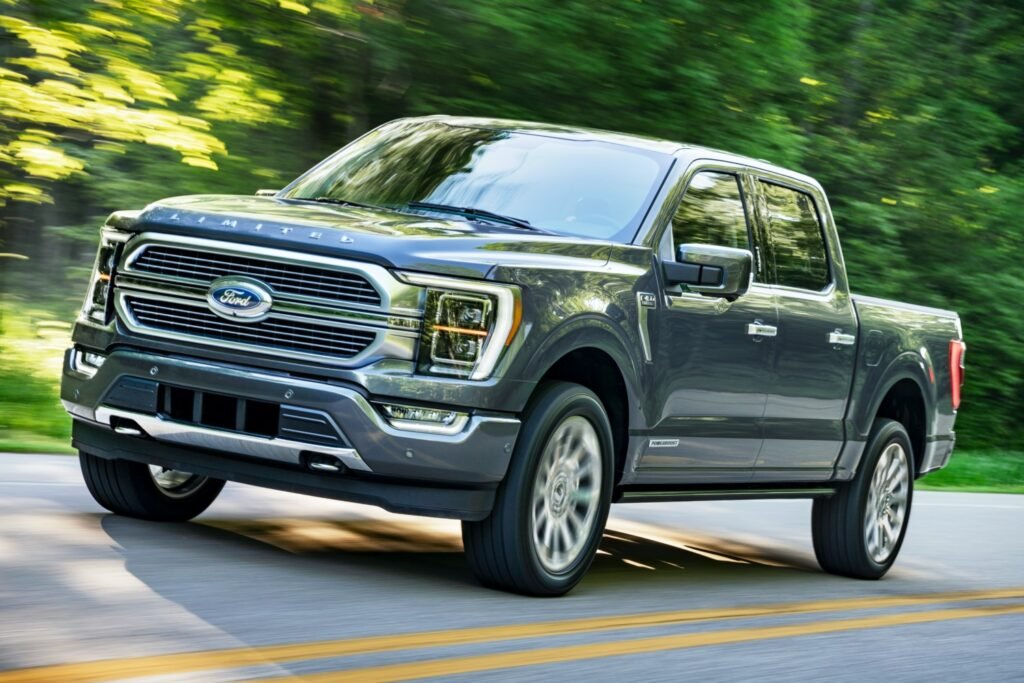
The 14th-generation Ford F-150 was introduced for the 2021 model year and brought major updates to the F-150 lineup, including new technology, the PowerBoost hybrid powertrain, Pro Power Onboard, and an updated interior.
The 14th-generation F-150 is available with several engines and configurations, including the 2.7L EcoBoost, 3.3L V6, 5.0L V8, 3.5L EcoBoost, 3.5L PowerBoost Hybrid, and later the 5.0L V8 and other updated powertrain options depending on model year.
While the 14th-gen F-150 can be an excellent full-size pickup, early model years in particular have accumulated complaints involving the 10-speed automatic transmission, electrical and electronic systems, hybrid components, engine issues, and various recalls. The 2021 F-150 has received a particularly large number of recalls and owner complaints compared with later model years.
Here are the most common Ford F-150 14th-generation problems to know about.
- 10-Speed Automatic Transmission Problems
The 10R80 10-speed automatic transmission is one of the biggest areas to inspect on a 14th-generation F-150.
Some owners of 2021–2024 trucks have reported harsh shifting, hesitation, shuddering, delayed engagement, gear hunting, and unexpected changes in transmission behavior. Reports of transmission and drivetrain problems are particularly prominent among complaints for early 14th-generation trucks.
Common symptoms include:
Harsh upshifts or downshifts
Transmission shudder
Hesitation when accelerating
Jerking at low speeds
Delayed engagement
RPM fluctuations
Gear hunting
Unexpected loss of drive power
Transmission warning messages
Possible causes include transmission calibration, adaptive-learning issues, valve-body or solenoid problems, torque-converter problems, fluid-related issues, or internal transmission wear.
Solution:
Have the transmission scanned for diagnostic trouble codes and check whether applicable software updates or technical service procedures have been performed.
During a test drive, pay particular attention to low-speed shifting, light-throttle acceleration, highway acceleration, and transmission behavior when the truck is fully warmed up.
- Unexpected Shift to Neutral or Loss of Drive Power
Certain 14th-generation F-150s have been affected by recalls involving transmission behavior that could cause an unexpected shift into neutral and loss of drive power.
This is a particularly important safety issue. A 2021 F-150 recall involved a condition that could result in an unexpected shift to neutral, while a newer 2026 recall campaign also covers certain 2021 F-150s and other Ford vehicles because the transmission park pawl may engage while the vehicle is moving.
Solution:
Check the VIN for all open recalls before purchasing or operating a used 14th-generation F-150.
Do not assume that a recall listed for one model year applies to every F-150. Recall coverage depends on the vehicle’s VIN and production details.
- Electrical and Electronic Problems
Electrical and electronic issues are another major area of concern, especially on early 14th-generation trucks. The 2021 F-150 complaint data contains a large number of electrical complaints.
Possible symptoms include:
Warning lights appearing unexpectedly
Battery going dead
Truck failing to start
Random electronic messages
Power windows malfunctioning
Infotainment problems
Camera problems
Intermittent electrical failures
Problems with sensors or driver-assistance systems
Possible causes include weak batteries, wiring problems, software faults, bad grounds, control-module issues, or defective electronic components.
Solution:
Start by testing the battery and charging system. If the battery repeatedly goes dead, perform a parasitic-draw test.
For intermittent electrical problems, a full diagnostic scan of the truck’s control modules may be necessary.
- SYNC 4 and Infotainment Problems
The 14th-generation F-150 introduced an updated infotainment system with a large touchscreen on many trims. Some owners have reported screen freezing, blank displays, Bluetooth problems, Apple CarPlay issues, and other electronic glitches.
Consumer Reports owner feedback for the 2024 F-150 includes reports of frozen or blank displays and Apple CarPlay/Bluetooth connectivity problems.
Possible symptoms include:
Touchscreen freezing
Screen going blank
Bluetooth disconnecting
Apple CarPlay problems
Android Auto connectivity issues
Audio system glitches
Slow system response
Camera display problems
Solution:
Check for Ford software updates and restart the system when appropriate. Persistent problems may require software reprogramming or replacement of the affected module or display.
- PowerBoost Hybrid Problems
The 3.5L PowerBoost Hybrid was one of the major new features of the 14th-generation F-150.
The system combines the 3.5L EcoBoost engine with an electric motor and hybrid battery system. While it offers excellent power and efficiency, early PowerBoost trucks have generated complaints involving battery charging, warning messages, hybrid-system faults, and other electronic issues.
Possible symptoms include:
Hybrid system warning
12-volt battery problems
Truck refusing to start
Unexpected warning messages
Loss of hybrid assistance
Electrical faults
Problems entering or leaving Park
Solution:
Hybrid-system problems should be diagnosed using equipment capable of communicating with the relevant hybrid control modules.
Do not attempt to repair high-voltage hybrid components without the appropriate training and equipment.
- 12-Volt Battery and Battery Management Problems
Some 14th-generation F-150 owners have experienced battery-related problems, including repeated low-battery conditions.
Possible symptoms include:
Truck won’t start
Multiple warning messages
Electronic systems shutting down
Battery warning
Slow starting
Battery repeatedly going dead
Remote-start problems
The problem can be particularly confusing because a battery may test normally but still become discharged because of an electrical drain or charging-system problem.
Solution:
Test the 12-volt battery, charging system, battery-management system, and parasitic draw.
On PowerBoost models, the hybrid system and battery-management system should also be checked if the problem continues.
- 3.5L EcoBoost Cam Phaser Problems
The 3.5L EcoBoost uses variable cam timing, and cam-phaser noise is a problem that potential buyers should be aware of.
A common warning sign is a rattling noise during a cold start. A persistent rattle or unusual ticking noise should be investigated rather than dismissed as normal engine noise.
Possible symptoms include:
Rattle during cold startup
Ticking noise
Rough idle
Check Engine Light
Reduced engine performance
Variable engine timing codes
Solution:
Have the engine inspected if it produces a significant or persistent startup rattle. A technician can check timing-related diagnostic codes and determine whether the cam phasers, timing components, or another part is responsible.
- 5.0L V8 Engine Problems
The 5.0L Coyote V8 is a popular engine choice in the F-150, but it can develop issues as mileage increases.
Possible concerns include:
Oil consumption
Engine ticking
Misfires
Spark plug or ignition-coil problems
Oil leaks
Variable valve-timing problems
Rough idle
Some 2021 F-150 complaint data includes reports of excessive oil consumption.
Solution:
Monitor engine oil levels regularly and investigate unusual oil consumption rather than simply topping up the oil indefinitely.
A compression test, leak-down test, diagnostic scan, and inspection for external leaks may be appropriate if oil consumption becomes excessive.
- 2.7L EcoBoost Problems
The 2.7L EcoBoost is generally considered a strong engine, but problems can still occur.
Possible symptoms include:
Check Engine Light
Misfires
Loss of power
Oil leaks
Turbocharger-related symptoms
Rough running
Poor acceleration
Possible causes include ignition problems, fuel-system faults, boost leaks, sensors, turbocharger issues, or other engine-management problems.
Solution:
Scan for diagnostic trouble codes and inspect the intake, turbocharger plumbing, ignition system, fuel system, and oil system as appropriate.
- Pro Power Onboard Problems
The Pro Power Onboard system is another major feature of the 14th-generation F-150. It allows the truck to provide electrical power through built-in outlets.
Because it relies on additional electronics and control systems, problems can occur with the generator system, outlets, control software, or related components.
Possible symptoms include:
Power outlets not working
Generator system warning
Power shutting off unexpectedly
Electrical output problems
Fault messages
Solution:
Check the system’s settings, circuit protection, and diagnostic messages. If the system continues to malfunction, it should be diagnosed by a Ford technician familiar with Pro Power Onboard.
- Brake and Parking Brake Problems
Brake complaints are also present among 14th-generation F-150 reports. Some issues involve the electric parking brake and brake electronics.
A major recall affected certain 2021–2023 F-150 trucks because the electric parking brake could unintentionally activate while driving. The recall covered a very large number of vehicles.
Possible symptoms include:
Parking brake warning
Parking brake activating unexpectedly
Brake warning messages
Difficulty releasing the parking brake
Brake noises
Reduced braking performance
Solution:
Check the VIN for outstanding brake and parking-brake recalls.
Any unexpected parking-brake activation or change in braking performance should be inspected immediately.
- Steering and Suspension Problems
The F-150 is a heavy truck, and suspension and steering components can experience significant loads, particularly on trucks used for towing or off-road driving.
Possible symptoms include:
Clunking over bumps
Steering vibration
Loose steering
Uneven tire wear
Vehicle pulling to one side
Wheel-bearing noise
Suspension squeaks
Possible causes include worn ball joints, tie rods, bushings, shocks, struts, wheel bearings, or alignment problems.
Solution:
Have the front and rear suspension inspected if the truck develops unusual noises or handling changes.
- Camera and Driver-Assistance Problems
Modern F-150s use numerous cameras and sensors for parking assistance and driver-assistance features.
Possible symptoms include:
Backup camera not working
Camera image freezing
Blind-spot warning unavailable
Collision warning unavailable
Lane-keeping system unavailable
Sensor blocked messages
Possible causes include software problems, damaged sensors, wiring faults, dirty camera lenses, or calibration issues.
Solution:
Keep cameras and sensors clean and check for software updates. After windshield replacement, body repairs, or front-end damage, some systems may require recalibration.
- Fuel System Problems
Fuel-system issues can occur on any engine configuration.
Possible symptoms include:
Long crank before starting
Engine hesitation
Loss of power
Poor fuel economy
Check Engine Light
Fuel odor
Engine stalling
Possible causes include fuel-pump problems, fuel-pressure issues, injectors, EVAP faults, or electrical problems.
Solution:
Check fuel pressure and scan for diagnostic trouble codes. If there is a gasoline smell or evidence of a fuel leak, have the truck inspected immediately.
- Towing and Drivetrain Issues
The F-150 is frequently used for towing, which places additional stress on the transmission, cooling system, brakes, suspension, and drivetrain.
Possible symptoms include:
Transmission overheating
Harsh shifting while towing
Driveline vibration
Rear differential noise
Reduced acceleration
Overheating
Trailer-related electrical problems
Solution:
Follow the manufacturer’s towing and maintenance requirements. If the truck is frequently used for heavy towing, pay particular attention to transmission and cooling-system maintenance.
Which 14th-Generation F-150 Problems Matter Most?
Not every problem is equally serious.
The issues that deserve the most attention when buying a used 14th-generation F-150 are:
10R80 transmission behavior
Open transmission recalls
Electrical and battery problems
PowerBoost hybrid-system faults
Engine startup rattles
Excessive oil consumption
Brake and parking-brake recalls
Major warning lights
Loss of power
Evidence of poor maintenance
Infotainment glitches and minor electronic issues can be frustrating, but a transmission, engine, braking, or power-loss problem should be considered much more significant.
Is the 14th-Generation Ford F-150 Reliable?
Reliability varies considerably by model year, engine, drivetrain, and individual vehicle.
The 2021 model year has accumulated a particularly high number of complaints and recalls. Consumer Reports currently rates the 2021 F-150 below other vehicles from the same model year and lists 27 recalls.
Later trucks have also experienced complaints and recalls. For example, Consumer Reports lists 10 recalls for the 2024 F-150 and identifies infotainment and in-car electronics as an owner-reported trouble area.
This does not mean that every 14th-generation F-150 is unreliable. A well-maintained truck with a clean history and completed recall work can be a very capable vehicle.
What to Check Before Buying a Used 14th-Generation F-150
Before buying a 2021 or newer F-150, check:
VIN for open recalls
Complete service history
10-speed transmission behavior
Cold-start engine noise
Engine oil level and condition
Oil leaks
Coolant leaks
Battery condition
Charging system
Infotainment system
Backup cameras
Driver-assistance features
Parking brake operation
4WD system, if equipped
Pro Power Onboard, if equipped
PowerBoost hybrid system, if equipped
Tire wear
Suspension and steering
Evidence of towing or heavy commercial use
Always perform a cold start during a pre-purchase inspection. This can reveal engine noises that may disappear once the engine warms up.
It is also important to scan the truck for diagnostic trouble codes, including manufacturer-specific codes that may not trigger a Check Engine Light.
Final Thoughts
The 14th-generation Ford F-150 is one of the most technologically advanced F-150 generations, but that additional technology also means there are more systems that can develop problems.
The 10-speed transmission is one of the biggest areas to inspect, particularly on early trucks. Electrical and infotainment problems, PowerBoost hybrid issues, engine concerns, parking-brake problems, and various recalls are also worth checking.
The 2021 model year deserves particularly careful inspection because it has accumulated a high number of recalls and owner complaints.
Before buying a used 14th-generation F-150, check the VIN for recalls, review maintenance records, perform a thorough test drive, listen for engine noise during a cold start, scan the truck for diagnostic codes, and have an independent mechanic inspect it.
A careful inspection can help you identify Ford F-150 14th-generation common problems before they become expensive repairs.