Possible to drive: Yes
What Does P0420 Mean?
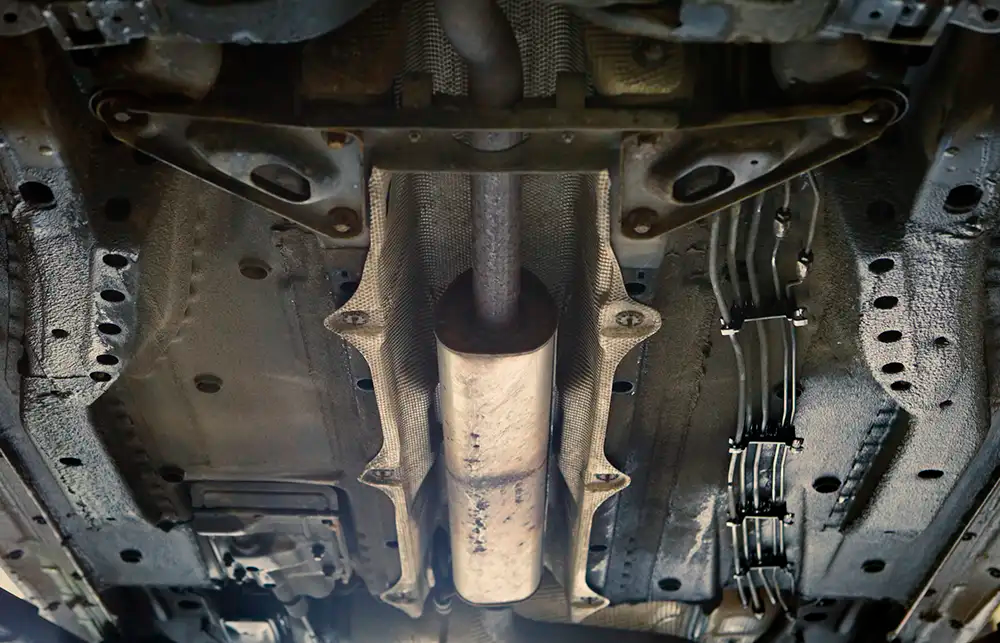
The P0420 code means that the vehicle’s engine control module (ECM) has detected that the catalytic converter is not operating as efficiently as expected. The full definition of P0420 is “Catalyst System Efficiency Below Threshold (Bank 1).” This code is commonly associated with the catalytic converter, oxygen sensors, exhaust system, or an underlying engine problem.
What Does the P0420 Code Mean?
When the engine is running, the catalytic converter reduces harmful emissions in the exhaust gases. Oxygen (O2) sensors located before and after the catalytic converter monitor how well it is working.
If the downstream oxygen sensor detects exhaust readings that are too similar to the upstream sensor, the ECM may determine that the catalytic converter is not storing and converting oxygen efficiently enough. This can trigger the P0420 code and turn on the Check Engine Light.
Common Symptoms of P0420
A vehicle with a P0420 code may show few noticeable symptoms, especially in the early stages. Common signs include:
• Check Engine Light coming on
• Reduced engine performance or acceleration
• Lower fuel economy
• A sulfur or rotten-egg smell from the exhaust
• Rattling noises from a damaged catalytic converter
• Failed emissions or smog testing
• In some cases, there may be no noticeable drivability problems at all
What Causes the P0420 Code?
There are several possible causes of the P0420 code. The catalytic converter is a common suspect, but it is not always the problem.
Possible causes include:
• A failing or damaged catalytic converter
• A faulty upstream or downstream oxygen sensor
• An exhaust leak near the catalytic converter or oxygen sensors
• Engine misfires
• A rich or lean air-fuel mixture
• Faulty fuel injectors
• Poor fuel pressure
• Ignition system problems
• Engine coolant entering the combustion chamber
• Oil consumption that contaminates the catalytic converter
• Incorrect engine timing
• Wiring or electrical problems involving the oxygen sensors
Because several different problems can trigger P0420, replacing the catalytic converter immediately is not always the best solution.
How Serious Is the P0420 Code?
P0420 is generally not an immediate safety emergency, and the vehicle may continue to drive normally. However, it should not be ignored.
If the catalytic converter is genuinely failing, continued driving can lead to reduced performance, increased emissions, poor fuel economy, and potentially more expensive repairs. If an engine misfire or fuel-system problem is causing the catalytic converter to overheat, driving for an extended period could cause additional damage.
How to Diagnose P0420
Proper diagnosis should start by scanning the vehicle for all stored trouble codes, not just P0420. Other codes, especially misfire or oxygen sensor codes, may point to the underlying problem.
A typical diagnostic process includes:
• Check for additional OBD-II trouble codes.
• Inspect the exhaust system for leaks.
• Inspect oxygen sensor wiring and connectors.
• Check the upstream and downstream O2 sensor readings.
• Look for engine misfires or fuel mixture problems.
• Check fuel trims and engine operating data.
• Test the catalytic converter’s efficiency.
• Inspect the catalytic converter for physical damage or rattling.
• Repair any underlying engine or exhaust problems before replacing the catalytic converter.
Can You Drive With a P0420 Code?
In many cases, you can drive with a P0420 code for a short period if the vehicle is running normally and there are no other serious symptoms. However, it is best to diagnose the problem as soon as possible.
If the Check Engine Light is flashing, the engine is misfiring, the vehicle has significant power loss, or there is a strong exhaust odor, stop driving and have the vehicle inspected. These symptoms can indicate a more serious problem that could damage the catalytic converter or engine.
How Much Does It Cost to Fix P0420?
The cost of repairing a P0420 code varies significantly depending on the cause and vehicle. A simple exhaust leak or sensor-related issue may cost considerably less than replacing a catalytic converter.
Possible repair costs can include:
• Exhaust leak repair
• Oxygen sensor replacement
• Wiring or connector repair
• Engine or fuel-system repairs
• Catalytic converter replacement
The best way to avoid unnecessary expense is to identify the actual cause of the P0420 code before replacing parts.
How to Fix the P0420 Code
The correct repair depends on the diagnosis. If an exhaust leak is found, repairing the leak may resolve the code. If an oxygen sensor is faulty, replacing the affected sensor may be necessary. If the catalytic converter has lost its efficiency or is physically damaged, replacement may be required.
It is also important to repair any engine problem that could have damaged the catalytic converter. For example, a persistent misfire or excessively rich fuel mixture can overheat and contaminate a catalytic converter.
P0420 Code Frequently Asked Questions:
Is P0420 always a bad catalytic converter?
No. A failed catalytic converter is one possible cause, but P0420 can also be caused by exhaust leaks, oxygen sensor problems, engine misfires, fuel mixture issues, and other conditions.
Can a bad O2 sensor cause P0420?
Yes. A faulty oxygen sensor or its wiring can provide incorrect information to the ECM and potentially trigger a P0420 code.
Will P0420 clear itself?
The Check Engine Light may turn off if the condition does not occur again for a certain number of drive cycles, but the stored trouble code may remain in the vehicle’s diagnostic memory. If the underlying problem is still present, the code will likely return.
Is P0420 an engine problem?
P0420 specifically indicates that the catalyst system efficiency is below the expected threshold. However, an engine problem such as a misfire, excessive oil consumption, or incorrect fuel mixture can cause or contribute to catalytic converter problems.
Can P0420 cause poor fuel economy?
It can. A failing catalytic converter or an underlying engine or fuel-system problem may contribute to reduced fuel economy. However, P0420 by itself does not always cause a noticeable change in fuel consumption.
Conclusion
The P0420 “Catalyst System Efficiency Below Threshold” code indicates that the vehicle’s computer has detected reduced catalytic converter efficiency on Bank 1. Although a failing catalytic converter is a common cause, oxygen sensors, exhaust leaks, engine misfires, fuel-system problems, and other issues can also trigger the code.
For an accurate repair, diagnose the underlying cause before replacing expensive components. Addressing the problem early can help prevent further damage, improve emissions performance, and avoid unnecessary repair costs.