
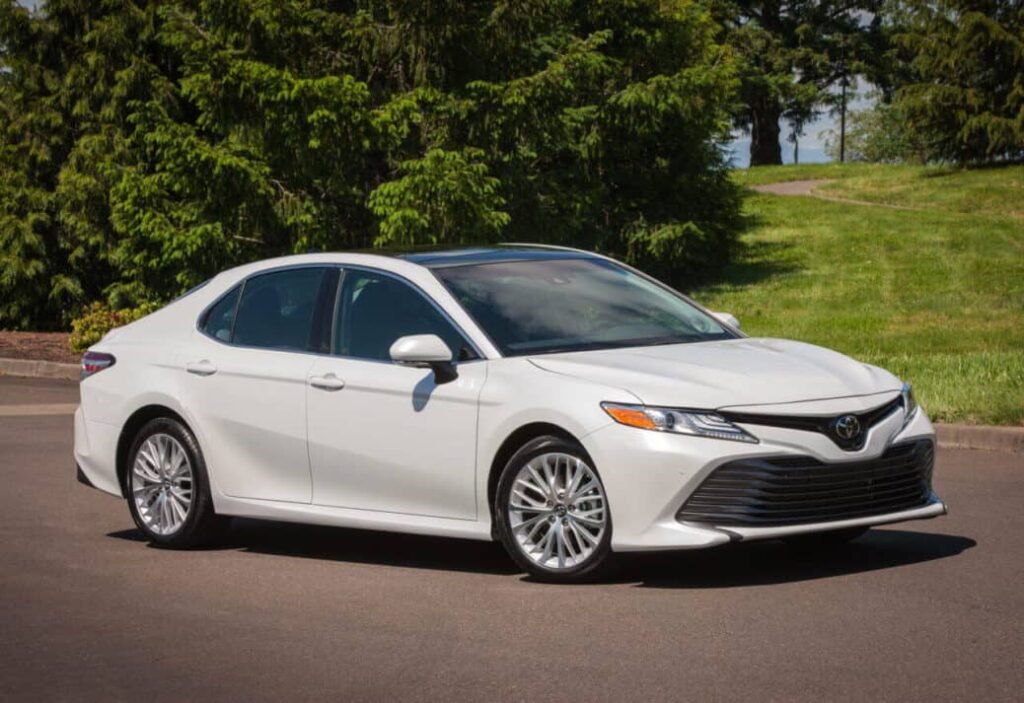
The 2018 Toyota Camry is the first model year of the eighth-generation Camry and is generally considered a reliable midsize sedan. However, like any vehicle, it has some known problems and owner complaints worth knowing about.
Reported problem areas for the 2018 Camry include transmission shifting, brakes, engine issues, electrical and infotainment problems, and certain recall-related concerns. Owner complaint databases list transmission/drivetrain problems as one of the largest complaint categories for this model year.
If you are buying, owning, or repairing a 2018 Camry, the following are the main problems to watch for.
- Transmission Shifting Problems
Transmission and drivetrain complaints are one of the most frequently reported problem categories for the 2018 Toyota Camry. Some owners have reported rough shifting, hesitation, delayed engagement, or unusual transmission behavior.
Possible symptoms include:
Rough or jerky shifting
Hesitation when accelerating
Delayed transmission engagement
Hard downshifts
Transmission slipping
Unusual noises
Poor acceleration at certain speeds
Possible causes can include transmission software calibration, adaptive transmission behavior, fluid-related issues, or mechanical problems.
Solution:
A proper diagnostic scan should be performed before assuming the transmission needs replacement. The technician should check for stored transmission codes, software updates, fluid condition, and transmission operation. If the problem is severe, further mechanical testing may be necessary.
- Brake Problems and Loss of Brake Assist
Brake-related issues are another area that deserves attention on a 2018 Camry. Certain 2018 Camry vehicles were recalled because the brake booster vacuum pump could potentially lose brake assist, increasing stopping effort and crash risk. Toyota’s recall remedy involved inspecting or replacing the affected brake booster vacuum pump.
Possible symptoms include:
Brake pedal feels unusually hard
Increased effort required to stop
Brake warning lights
Unusual noises from the brake system
Reduced braking assistance
Solution:
Check the vehicle identification number (VIN) for outstanding recalls. If the vehicle is covered by a brake-related recall, the repair should be completed by an authorized Toyota dealer.
Any sudden change in braking performance should be treated as a safety issue and inspected immediately.
- Engine Problems
Engine problems are reported less frequently than transmission complaints, but there are several things to check on a 2018 Camry.
Certain early-production 2018 Camry vehicles with the 2.5-liter four-cylinder engine were included in a recall related to incorrectly sized pistons. Under certain circumstances, the engine could stall.
Possible engine symptoms include:
Check Engine Light
Engine misfires
Rough idle
Loss of power
Unusual engine noises
Excessive oil consumption
Engine stalling
Solution:
Scan the vehicle for diagnostic trouble codes and inspect the engine for leaks, misfires, abnormal noises, and other problems. If purchasing an early 2018 Camry, verify its VIN and recall history.
- Fuel Pump Problems
Fuel pump failure is another important issue to check because a failed fuel pump can cause the engine to stall.
Toyota issued fuel pump recalls covering certain vehicles, including some 2018 Camry models. Depending on the specific vehicle and recall campaign, a failing fuel pump could cause an engine stall while driving.
Possible symptoms include:
Engine cranks but does not start
Intermittent starting
Engine stalls
Loss of engine power
Long cranking before starting
Solution:
Check the VIN for open fuel pump recalls. If the vehicle is covered, the recall repair should be performed by Toyota.
- Fuel System Leaks on Some V6 Models
Certain 2018 Camry models equipped with the V6 engine were recalled because fuel delivery pipes may not have been properly connected to fuel hoses. A fuel leak in the presence of an ignition source can create a fire risk.
Possible warning signs include:
Strong gasoline smell
Visible fuel leakage
Difficulty starting
Check Engine Light
Engine running problems
Solution:
If you smell gasoline around the engine compartment, do not ignore it. Have the vehicle inspected promptly and check the VIN for applicable recalls.
- Infotainment and Bluetooth Problems
Some 2018 Camry owners have reported problems with the Entune infotainment system, Bluetooth connectivity, and other interior electronics. Owner complaint data includes infotainment and Bluetooth complaints.
Possible symptoms include:
Bluetooth disconnecting
Phone pairing problems
Screen freezing
Audio system glitches
Slow infotainment response
Navigation or touchscreen problems
Solution:
Check for available software updates and reset the infotainment system if appropriate. Persistent problems may require professional diagnosis or replacement of the affected component.
- Water Pump and Cooling System Issues
Cooling-system problems are not the largest complaint category for the 2018 Camry, but some owners have reported water pump failures. Consumer Reports owner feedback includes reports of water pump replacement on 2018 Camrys.
Possible symptoms include:
Coolant leaks
Low coolant level
Engine overheating
Coolant odor
Whining or grinding noise from the water pump
Solution:
Inspect the cooling system for leaks and monitor coolant levels. An overheating engine should not be driven for extended periods because severe overheating can cause expensive engine damage.
- Check Engine Light and Emissions Problems
A Check Engine Light on a 2018 Camry does not necessarily mean the engine itself is failing. Various emissions, sensor, fuel, and exhaust problems can trigger diagnostic trouble codes.
Possible causes include:
Oxygen sensor problems
EVAP leaks
Catalytic converter efficiency problems
Fuel-system issues
Ignition problems
Air-fuel mixture problems
Engine misfires
Solution:
Use an OBD-II scanner to identify the stored trouble codes. The code should be diagnosed rather than simply cleared. Replacing parts without confirming the cause can result in unnecessary repair costs.
- Suspension and Front-End Noises
Some owners have reported suspension noises and issues involving components such as struts. Consumer Reports owner feedback includes reports of front strut replacement on 2018 Camrys.
Possible symptoms include:
Clunking over bumps
Squeaking
Knocking sounds
Uneven tire wear
Excessive bouncing
Vehicle pulling to one side
Solution:
Have the suspension inspected if unusual noises appear. The technician should check struts, shocks, bushings, ball joints, control arms, and other steering and suspension components.
- Electrical Problems
Electrical complaints are also reported for the 2018 Camry, although they are less common than transmission-related complaints.
Possible symptoms include:
Warning lights appearing unexpectedly
Interior lights flickering
Electrical accessories malfunctioning
Battery-related problems
Intermittent electronic issues
Infotainment problems
Solution:
Check the battery, alternator, fuses, grounds, wiring, and relevant control modules. Intermittent electrical faults may require specialized diagnostic equipment.
2018 Toyota Camry Recalls
Recall history is particularly important when buying a used 2018 Camry. Multiple recalls have been issued for this model year, including campaigns involving fuel pumps, brake assist, fuel lines, engine components, and other issues.
Recall coverage depends on the vehicle’s VIN, engine, production date, and equipment. A recall listed for the model year does not necessarily mean that every 2018 Camry is affected.
Always check the VIN to determine whether a particular vehicle has open recalls.
Is the 2018 Toyota Camry Reliable?
Overall, the 2018 Toyota Camry has a strong reliability reputation compared with many vehicles from the same model year. Consumer Reports rates its reliability above the average for vehicles of its model year.
However, the 2018 model has some specific areas that deserve attention, especially transmission behavior, brake recall status, fuel pump recall status, and the condition of the engine and cooling system.
The condition and maintenance history of an individual Camry are more important than the model year alone.
What to Check Before Buying a Used 2018 Camry
Before purchasing a used 2018 Toyota Camry, check:
VIN for open recalls
Transmission shifting during a test drive
Brake pedal feel and braking performance
Engine oil and coolant levels
Signs of oil or coolant leaks
Fuel odors or fuel leaks
Check Engine Light
Stored OBD-II trouble codes
Infotainment and Bluetooth operation
Suspension noises
Tire wear
Service and maintenance records
Battery and charging system
Air conditioning performance
A professional pre-purchase inspection is especially worthwhile on a higher-mileage Camry.
Frequently Asked Questions
What is the most common problem with a 2018 Toyota Camry?
Transmission and drivetrain problems are among the most frequently reported issues for the 2018 Camry, with complaints including rough shifting and transmission failure.
Does the 2018 Toyota Camry have transmission problems?
Some owners have reported rough shifting, hesitation, and other transmission problems. This does not mean every 2018 Camry has a transmission defect, but transmission behavior should be checked carefully during a test drive.
Does the 2018 Camry have a fuel pump recall?
Yes. Certain 2018 Camry vehicles are included in Toyota fuel pump recall campaigns. The exact recall coverage depends on the vehicle’s VIN.
Does the 2018 Camry have brake problems?
Certain vehicles were recalled because of a potential loss of brake assist from the brake booster vacuum pump. Check the VIN to determine whether the recall applies and whether the repair has been completed.
Is the 2018 Toyota Camry a good used car?
Yes, a well-maintained 2018 Camry can be a good used-car choice. Its overall reliability is strong, but buyers should check recall history, transmission operation, brakes, engine condition, and maintenance records before purchasing.
How many miles can a 2018 Toyota Camry last?
There is no guaranteed mileage limit. A 2018 Camry that receives regular maintenance and timely repairs can potentially remain in service for many years and high mileage. Actual longevity depends on maintenance, driving conditions, climate, and the individual vehicle’s condition.
Final Thoughts
The 2018 Toyota Camry is generally a reliable vehicle, but it is not completely problem-free. The most important areas to check are transmission behavior, brake assist, fuel pump recall status, engine condition, fuel-system leaks, infotainment electronics, and the cooling system.
If you are buying one used, don’t rely solely on the model’s reputation. Check the VIN for recalls, take the car on a thorough test drive, scan it for diagnostic codes, inspect for leaks and unusual noises, and have an independent mechanic perform a pre-purchase inspection.
These steps can help you identify common 2018 Toyota Camry problems before they turn into expensive repairs.